
When You Should Never Drive? : Safety Tips for Fatigue Weather under influence and Distractions.

A safe driver is not only someone who knows how to handle a vehicle. A safe driver also knows when to leave the keys alone.
Many crashes begin before the engine starts. A drink at a party, a sleepless night, a sudden rainstorm, a migraine, or a phone buzzing on the passenger seat can all turn an ordinary trip into a serious risk. On Indian roads, where traffic can include cars, two-wheelers, buses, pedestrians, animals, broken surfaces, and sudden lane changes, even a small delay in judgement can have major consequences.
This guide covers the situations where driving is never worth the risk: alcohol or drugs, severe weather, fatigue, medical problems, and distractions. The advice here is practical and cautionary. It is not meant to judge anyone. It is meant to help people make safer decisions before danger appears on the road.

Do not drive after alcohol or drugs
Alcohol and drugs affect the exact skills driving depends on: reaction time, judgement, coordination, vision, attention, and self-control. The danger is not limited to heavy drinking. Even a small amount can make a driver more likely to misjudge speed, follow too closely, miss a signal, or react late to a pedestrian or two-wheeler.
Drugs can be just as dangerous. This includes illegal substances, cannabis, sedatives, strong pain medicines, sleeping pills, and some cold or allergy medicines. Mixing alcohol with medicines can make impairment worse and less predictable.
The biggest trap is confidence. Many impaired drivers feel they are “fine” because alcohol and certain drugs also reduce self-awareness. That false confidence can lead to speeding, risky overtaking, and slower braking.
If alcohol or drugs are in your system, the safest driving plan is simple: do not drive at all.
Safer choices before drinking
Plan transport before the first drink, not after the last one. Good options include:
Book a cab or auto in advance.
Choose a sober driver who agrees not to drink.
Use public transport where it is safe and available.
Stay overnight if the place is far away.
Ask a trusted person for a pickup.
If someone else is about to drive after drinking, speak up early and calmly. Offer a practical alternative rather than starting an argument.
Try saying:
“Let’s book a cab. We can collect the car tomorrow.”
“You have had a drink. I am not comfortable with you driving.”
“Give me the keys. I will help arrange a ride.”
Do not rely on common myths
Coffee does not make an impaired driver safe. A shower does not remove alcohol from the body. Eating after drinking does not restore reaction time. Sleeping for a short while may not be enough, especially after late-night drinking.
If there is any doubt, do not drive. Doubt itself is a warning sign.
Avoid driving in severe weather
Bad weather reduces grip, visibility, and control. Heavy rain, snow in hilly regions, dense fog, dust storms, and strong winds can turn a familiar route into a dangerous one. The safest choice is often to delay the trip.
In many parts of India, heavy monsoon rain can flood roads quickly. Water can hide potholes, open drains, broken edges, and stalled vehicles. Fog in winter can make highways and rural roads especially risky because drivers may not see slow-moving vehicles until it is too late.

When rain makes driving unsafe
Avoid driving during heavy rain if:
Visibility is poor even with wipers on.
Water is flowing across the road.
The vehicle pulls or slips while braking.
Roads are known to flood.
You cannot see lane markings, kerbs, or potholes.
If you are already on the road, slow down gradually. Keep extra distance from the vehicle ahead. Avoid sudden braking or sharp steering. Use headlights, not high beam, so others can see you. If rain becomes too heavy, pull over at a safe place away from moving traffic and wait.
Never drive through water if you do not know its depth. Even a shallow-looking flooded patch can stall the engine, damage the vehicle, or sweep away a two-wheeler or small car if water is moving fast.
When fog makes driving unsafe
Fog is dangerous because it creates a false sense of empty road. A driver may feel the road is clear until a truck, cyclist, animal, or parked vehicle appears suddenly.
In dense fog:
Delay the journey if possible.
Use low beam headlights or fog lamps if available.
Avoid high beam because it reflects back and reduces visibility.
Drive slowly enough to stop within the distance you can see.
Keep more space than usual.
Avoid overtaking unless visibility is clearly safe.
If visibility drops to a few metres, find a safe place to stop. Do not stop in the middle of the road or on a blind curve. Turn on hazard lights only when stopped or in a genuine emergency, not as a replacement for careful driving.
When snow, ice, or hill weather makes driving unsafe
In mountain areas, roads can become slippery with snow, ice, slush, or rain. Sharp bends, steep slopes, and narrow roads leave very little room for mistakes.
Avoid driving if local authorities warn against travel, tyres are not suitable, brakes feel weak, or you are not trained for hill and icy-road driving. If travel is necessary, keep speed low, avoid sudden inputs, and leave much more space than usual.
Never drive when you are drowsy
Fatigue is often underestimated because it feels normal. Many people push through tiredness after work, night shifts, long family functions, late-night travel, or early morning departures. The problem is that a tired brain cannot perform like an alert one.
Drowsy driving can cause:
Slow reaction time.
Poor lane control.
Missed signs and signals.
Irritability and risky choices.
Short sleep episodes at the wheel.
A microsleep can last only a few seconds, but at road speed, that is enough to drift into another lane, hit a divider, or miss a stopped vehicle.
Warning signs that you should stop
Do not keep driving if you notice any of these signs:
Frequent yawning.
Heavy eyelids.
Trouble remembering the last few kilometres.
Drifting from the lane.
Missing turns or signs.
Nodding head.
Feeling restless or irritated.
Needing loud music or open windows to stay awake.
These tricks do not solve fatigue. Loud music, strong tea, open windows, and chewing gum may make you feel awake for a short time, but they do not replace sleep.
What to do instead
The best solution is rest. If you feel drowsy, stop at a safe, well-lit place. Take a short nap if conditions allow. Switch drivers if someone else is alert and licensed. If you are on a long trip, plan breaks before you feel exhausted.
For long-distance travel:
Sleep properly the night before.
Avoid starting after a full workday.
Share driving where possible.
Stop every few hours.
Avoid heavy meals that make you sleepy.
Be extra careful between late night and early morning.
If you regularly feel sleepy while driving, even after enough sleep, speak with a healthcare professional. Conditions such as sleep apnoea can affect alertness and need proper care.

Do not drive during medical problems that affect control
A medical issue can impair driving even when a person has no intention of taking risks. Pain, dizziness, blurred vision, fainting, low blood sugar, panic symptoms, severe headache, fever, or medication side effects can all affect driving ability.
This section is informational only. For personal medical advice, follow a qualified healthcare professional’s guidance.
Conditions and symptoms that should stop a journey
Avoid driving if you have symptoms that affect alertness, vision, movement, judgement, or control. These include:
Chest pain or pressure.
Sudden dizziness or faintness.
Blurred or double vision.
Confusion or disorientation.
Severe headache or migraine.
Numbness or weakness in the face, arm, or leg.
Seizure symptoms or recent seizure activity.
Severe anxiety or panic that affects control.
Low blood sugar symptoms such as sweating, shaking, confusion, or weakness.
Strong pain that limits movement.
Vomiting, high fever, or dehydration.
If symptoms start while driving, do not try to “just reach home” if control is affected. Slow down carefully, move to a safe place, stop, and ask for help.
Medicines can also make driving unsafe
Some medicines cause drowsiness, delayed reaction, blurred vision, dizziness, or poor coordination. These can include sleeping tablets, some allergy medicines, cough syrups, muscle relaxants, pain medicines, anti-anxiety medicines, and some medicines used after surgery.
Before driving after taking a new medicine:
Read the warning label.
Ask the doctor or pharmacist if driving is safe.
Avoid driving until you know how the medicine affects you.
Never mix medicine with alcohol unless a doctor has clearly said it is safe.
If a medicine label says not to operate machinery, treat driving as included. A car or two-wheeler is heavy machinery on a public road.
Plan around known medical needs
People with known health conditions can often drive safely with proper planning, but they need to respect warning signs. Keep necessary supplies available, such as prescribed medicines, water, snacks for blood sugar if advised, spectacles, or emergency contact information.
If a doctor has told you not to drive for a period after a seizure, surgery, eye procedure, injury, or medication change, follow that advice. It protects you and everyone else using the road.
Put the phone away and remove other distractions
Distracted driving is not only about texting. It includes anything that takes eyes, hands, or mind away from driving. A mobile phone is the most common example, but distractions also include eating, adjusting music, checking maps, turning to talk to passengers, handling children or pets, grooming, and reaching for items.
A moving vehicle needs constant attention. A person crossing unexpectedly, a scooter braking hard, or a car changing lanes can appear in seconds. Looking away briefly can be enough to miss the moment that matters.
The safest phone is the one you do not touch
Before driving:
Set the route on maps.
Start the playlist or podcast.
Put the phone on silent or driving mode.
Keep it out of hand, such as in a bag or glove box.
Tell people you will reply after the trip.
Hands-free calls are safer than holding a phone, but they can still distract the mind. If the conversation is emotional, complex, or urgent, stop at a safe place before continuing.
Do not read or type messages at traffic signals. The habit carries over when the vehicle starts moving. It also reduces awareness of pedestrians, cyclists, and two-wheelers around the vehicle.
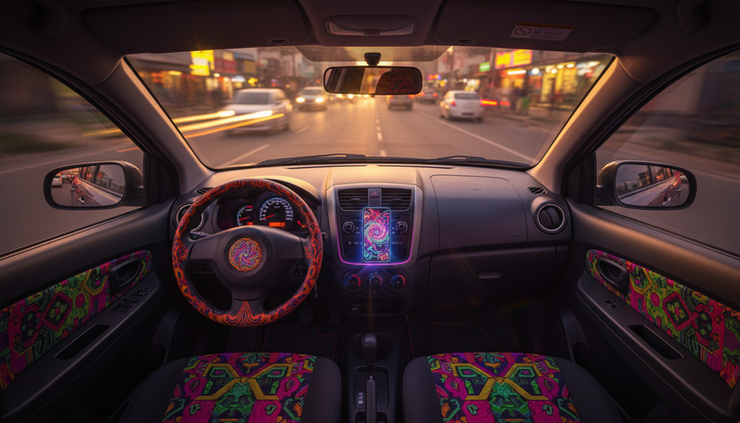
Manage passengers, children, and pets before moving
A noisy vehicle can be as distracting as a phone. Children may need attention. Pets may move suddenly. Passengers may ask questions at the wrong time.
Set expectations before driving. Ask passengers to avoid loud arguments, sudden gestures, or showing videos to the driver. Secure children in proper restraints. Keep pets restrained or in a carrier so they cannot jump near the pedals or steering wheel.
If something needs attention, stop safely. Do not solve it while the car is moving.
Use a simple decision rule before every trip
Good driving begins with a quick self-check. Before starting, ask:
Question | If the answer is yes |
Have I consumed alcohol or drugs? | Do not drive. Arrange another ride. |
Is the weather making visibility or grip unsafe? | Delay the trip or stop safely. |
Am I sleepy or struggling to stay alert? | Rest before driving. |
Do I have symptoms or medicine side effects? | Get medical advice or ask someone else to drive. |
Am I likely to use my phone or handle distractions? | Set everything up before moving or do not start. |
This is the heart of When You Should Never Drive Safety Tips for Alcohol Fatigue Weather and Distractions: if your body, mind, vehicle, or road conditions are not fit for safe driving, the right choice is to wait, stop, or hand over the keys.
A safer road starts with one decision
Driving is a responsibility shared with strangers. The people around you may be children on scooters, families in small cars, pedestrians crossing in low light, delivery riders, bus passengers, or workers heading home. None of them should pay the price for a preventable decision.
Never drive under the influence. Do not fight severe weather. Stop when fatigue takes over. Respect medical limits. Put distractions away before the vehicle moves.
The safest drivers are not the ones who think they can handle every situation. They are the ones who know when driving is no longer safe, and choose another way.
Here's the corrected version for Varsha Motor Driving School & Travels:
Need Expert Driving Assistance?
Whether you're learning to drive for the first time, looking for refresher lessons, or need guidance with driving licence and RTO procedures, the experienced team at Varsha Motor Driving School & Travels is here to help.
📞 Call / WhatsApp: +91 87993 14898 | +91 83209 00156 📧 Email: varshatravels75@gmail.com🌐 Website: www.drivingschoolvapi.com



Comments